
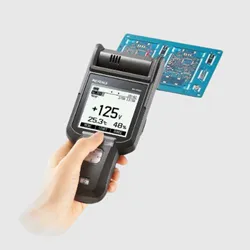
STACK INDUSTRY is a specialized charge detector manufacturer and supplier providing precision electrostatic measurement solutions. Our SK series static charge detectors are engineered to accurately measure and diagnose electrostatic buildup on production lines, finished products, and work surfaces. Ideal for paper, printing, electronics, and manufacturing industries requiring reliable static charge monitoring and control.
A charge detector (electrostatic meter) measures static electricity voltage on surfaces and objects. The STACK INDUSTRY SK series uses non-contact measurement technology to accurately detect electrostatic potential without touching the surface.
The SK series charge detectors measure electrostatic voltage typically in the range of ±0 to ±20,000V, making them suitable for detecting both large and minimal static charges across various applications.
The rotating head allows operators to measure static charge on surfaces at various angles and in hard-to-reach areas without repositioning the equipment, improving measurement flexibility and efficiency.
The built-in laser pointer helps operators identify the exact reference distance (typically 10-20mm) required for accurate measurements, ensuring consistent and reliable results.
STACK INDUSTRY charge detectors are widely used in paper manufacturing, printing, electronics assembly, plastic processing, textiles, pharmaceuticals, and any industry where static control is critical.
Yes, the SK series is specifically designed for production line use. Its fast measurement speed and portable design make it ideal for continuous ESD monitoring and quality assurance.
The SK series offers high accuracy with repeatability of ±3-5% at typical operating distances, making it suitable for critical ESD control applications requiring precise measurements.
STACK INDUSTRY hand-held detectors typically offer 10-20 hours of continuous operation on a single battery charge, depending on model and usage patterns.
Yes, many SK series models include data logging capabilities for storing measurements. This allows trend analysis and helps demonstrate ESD compliance to regulatory authorities.
Optimal measurement distance is typically 10-20mm from the surface, as marked by the laser pointer. At this distance, accuracy is maximized and results are most reliable.
STACK INDUSTRY provides calibration services and guidance. Most models feature easy calibration using standard reference plates or can be sent for factory calibration annually.
Yes, the SK series works on all surface types including plastic, paper, metal, fabric, rubber, and composite materials, making it versatile for multi-product manufacturing environments.