
Clamp-On Ultrasonic Flow Measurement Technology – Accurate, Non-Invasive & No Process Downtime
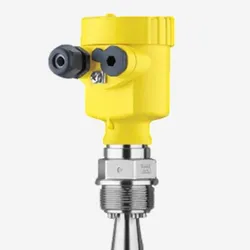
A radar level sensor is a high-frequency microwave-based instrument designed for precise, non-contact level measurement of liquids, bulk solids, and slurries in tanks and silos.
Using advanced 80 GHz radar technology, it delivers a highly focused signal beam for stable and accurate measurement — even in challenging conditions such as dust, foam, vapor, or surface turbulence.
With measuring ranges up to 80 meters, radar level transmitters are ideal for demanding industrial applications including:
Its intelligent signal processing ensures reliable performance, low maintenance, and long-term operational stability in harsh industrial environments.
| Input Voltage Options | 2 WIRE (DC 24V) / 4 WIRE (24VDC / AC 220V) - flexible power supply compatibility |
|---|---|
| Output Signals | 4-20mA / HART / RS485 / MODBUS - multiple industrial communication protocols |
| Microwave Frequency | 80 GHz - highly focused beam for superior accuracy and range |
| Display Feature | Field Display - local reading capability for on-site verification |
| Protection Rating | IP67 - complete dust and water resistance for harsh environments |
| Non-Contact Measurement Range | 10 to 80 Meters - suitable for large tanks and silos |
| Standard Temperature Range | -40 to 130 °C - standard industrial applications |
| High Temperature Version | -40 to 230 °C - for extreme thermal applications |
| Outer Housing Options | Plastic / Aluminium / Stainless Steel - material choices for corrosive or hazardous environments |
| Measurement Accuracy | ±5mm - precise level indication for critical processes |
Radar level transmitters provide accurate, non-contact level measurement in demanding industrial environments. They perform reliably under high temperature, pressure, vapors, dust, and turbulent conditions.
In water and wastewater treatment plants, they ensure continuous monitoring of tanks and reservoirs. The food and beverage industry uses them for hygienic, contamination-free measurement.
Chemical and oil & gas industries benefit from their resistance to corrosive vapors, foam, and pressure fluctuations, making them ideal for tank farm management and inventory control.
Pharmaceutical manufacturing relies on their high precision to maintain strict quality and compliance standards.
Radar level sensors use microwave (80GHz) technology for non-contact measurement, unaffected by foam, vapor, or turbulence. Ultrasonic sensors use sound waves and can be affected by temperature changes and foam. Radar sensors offer superior accuracy and wider measurement ranges (up to 80m vs 5–6m).
Yes, radar level transmitters can accurately measure liquids, solids, and slurries due to their microwave technology. They are ideal for measuring granular materials in silos and slurries in chemical processing without contact contamination.
IP67 means the sensor is completely protected against dust (6) and can withstand immersion in water up to 1 meter for 30 minutes (7). This makes it suitable for harsh outdoor and wet industrial environments.
The 80GHz frequency provides an extremely focused beam, allowing accurate measurements at extended ranges (up to 80 meters) while maintaining ±5 mm accuracy. It reduces interference and improves performance in challenging process conditions.
Explore related level sensors or request a quote today.